
NAGALAND TOUR – KOLKATA – ODISHA TOUR
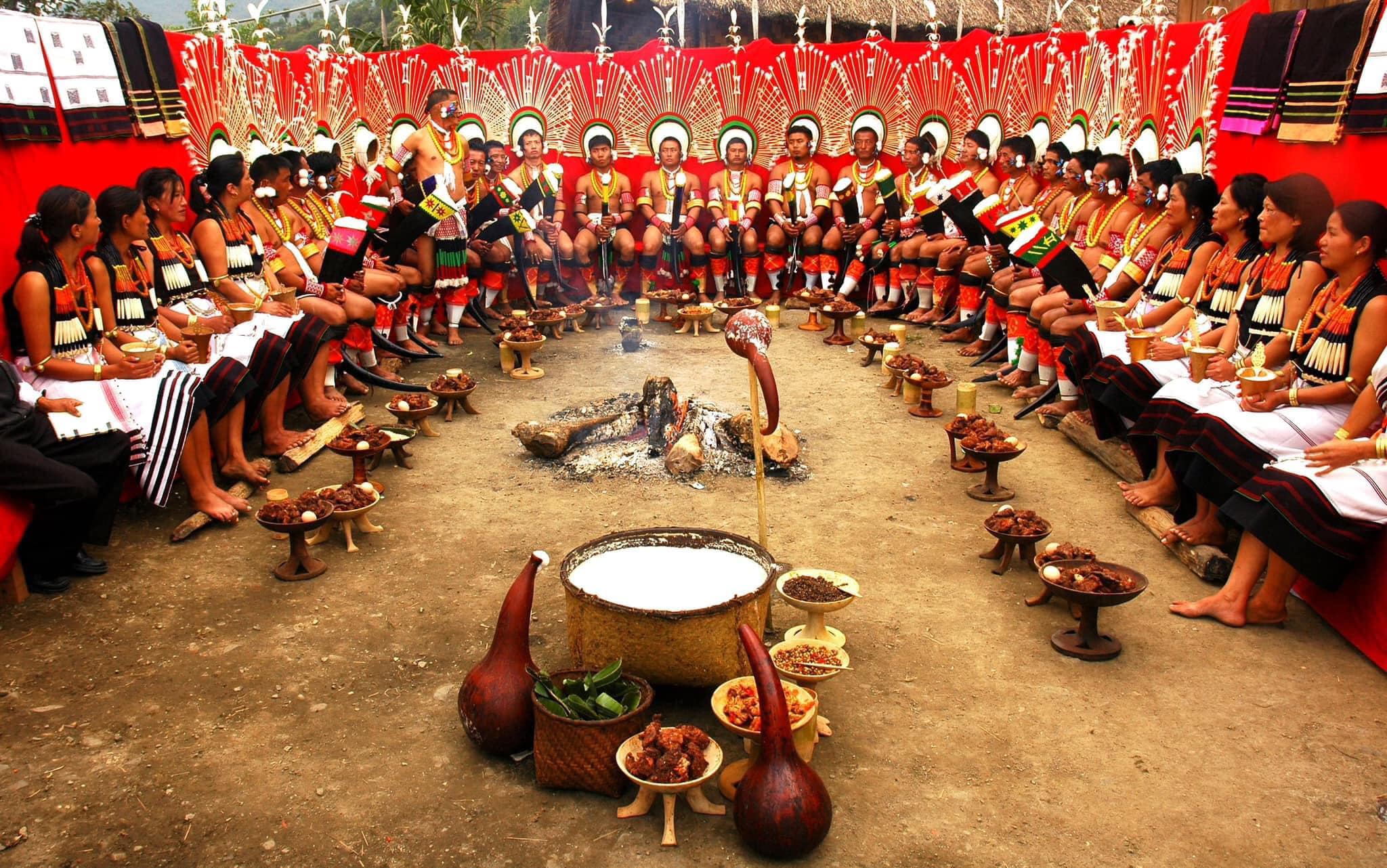
The Konyak tribe: They are Tibeto- burmise origin( which we have detail described in our
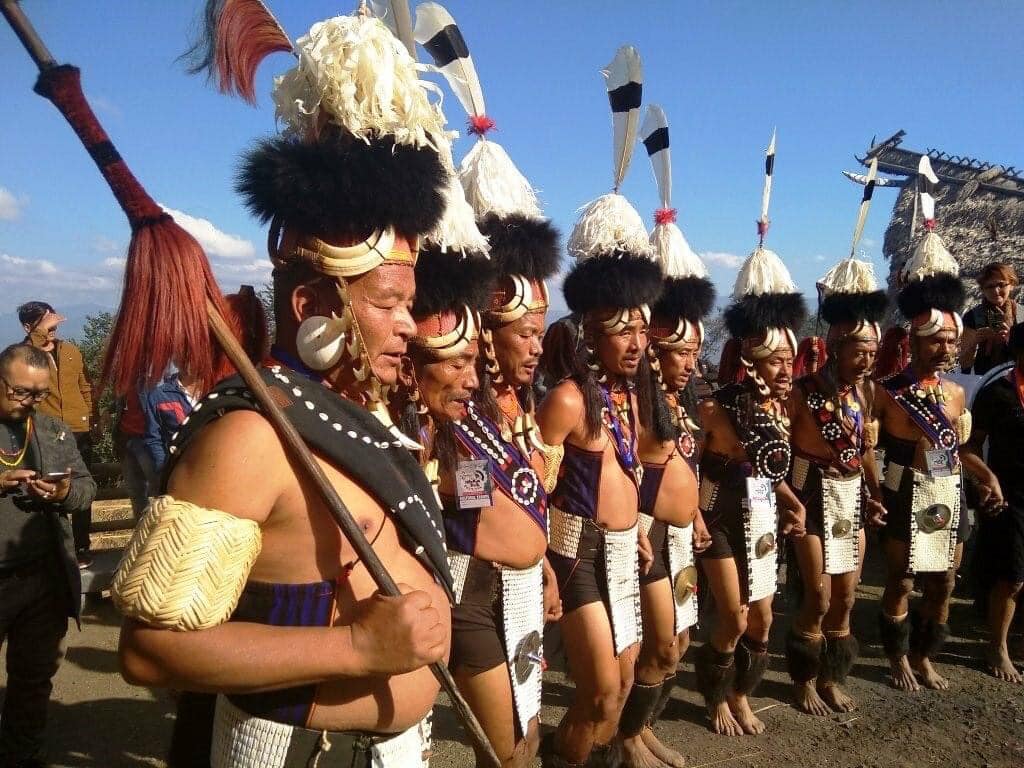
North-East tribal tour package) , live in the isolated zone of Mon area of northern Nagaland and one of the major tribes of the state. Once they were famous for head hunter / and they hunted head to their neighbour villagers for expand of territory , for hunting head they use different traditional weapon including daws (a traditional knife) , and then they brought the enemy head as a trophy to their village/ then after they tattoo their face and body as a victor.
The village chief is called Angh (like king) – and their main long house straw and palm leave
thatch hall for meeting called Murong which also they keep their traditional weapon and musical instrument including long wooden hand made drum / most of the special house out decorate with skull of animals / inside of the hall they keep cooking by fire wood and just upper into it they preserve their surplus animal meat / and smoke to preserve it for future use. They use bone and other stone jewelry , they ladies use traditional hand made black skirt and men use hand made shawl type with nice wild pig bone with bear skin head gear.
They have good traditional wood carving and weapon making skill .
Major Festival they celebrate:
Place of festival Celebration date
Aoleang Longwa, Mon area
1 st – 6 th April every year
Horn bill festival Kohima 1 st – 10 th December every year
The AO Naga: They are one the major tribe (Tibeto- burmise origin) mostly found in
Mokokchung district in Nagaland. Speak sino-tibeto language chungli AO, Mongsen AO, and
western Mokokchung district only three village can speak Changki AO,
Most Hospitality AO naga village in Mokokngchung district is- Chuchuyimlang, Mopungehukit, Impur, Ungma, Lonkhom,
Out of all the AO naga celebrate their grand festival – “ Moatsu” , it is a festival of Bonding , this festival celebrated after the season of sowing is over. It continue with vigorous singing and dancing customary practices of making the best rice beer and rearing the best pigs for
slaughtering during the festival. The women flok, dressed in their traditional fineries, join the
men folk in composing warrior songs. Villagers sing songs to eulogize the lovers and the village folk as a whole. The elders encourage the youth to be bold and heroic for defending the villages from enemies, a custom continued from the head-hunting days.
Major Festival they celebrate:
Name of the grand festival
Celebration date
Moatsu Chuchuyimlang 1 st -3 rd May every year
Horn bill festival Kohima 1 st – 10 th December every year
Photography : Allowed by the permission of Chuchuyimlang village chief
These tibeto- burman tribal community fourth largest populated group in
Nagaland found in Kohima and Dimapur district of Nagaland. Their neighbor called them
Tenyimia means Swift walker. Entire Angami land is divided into four geographical part such as Northern , western , southern and plan platoo. Each area has different oral language and out of all Tenyidie is their most prestigious one with written in Roman script.
Their village boundary is out cover with field called khel and every entrance of village is nice
display of clan mark and in the village Morung they called Kichuki and Tehuba which is male
and female dormitory respectively . after adult sent the youth stay there and learn their life style.
Out of all their main festival is – Sekrenyi , it is a celebration of purification accompanied with feasting and singing. A highlight of Sekrenyi is the Thekra Hie, when the village youths gather and croon traditional songs throughout the day.
Major Festival they celebrate:
Name of the grand festival
Sekrenyi Thouphema & Khonma
village 25 th – 27 th February every year
Horn bill festival Kohima 1 st – 10 th December every year
The Rengma Naga:- The Rengmas are Tibeto- Burman origin and an ancient days they called
the slave of Angami naga but now there is no slavery system in India and they settle in Kukri hill
of Kohima district. They male wear tail shaped very lean cloth to cover the lower part and
female wear black color skirt type of costume. Which they dye the color from nature at their own hand made looms. They believe age old traditional shift cultivation / hunting and gathering is also way of their life. Stay in bamboo made straw thatch up ground houses in the high hill area.
Bamboo made handicraft is the main occupation of traditional Rengmas’. Their morung called Rensi , where they settle their village and family dispute too.
They celebrate Ngada is the main festival just after the harvest. It is the festival of thanksgiving
and rejoiing. Ngda also underscores the end of the agricultural year. The village high priest
(Phensengu) hearalds the beginning of the festival at the top of his voice, so that he villagers
can prepare themselves for it.
Major Festival they celebrate:
Place of festival Celebration date
Ngada Tseminyu / Thouphema village
27 th & 28 th November every year
Horn bill festival Kohima 1 st – 10 th December every year
Birding at Mangalajodi- A nature lover’s paradise
Duration : Everyday : 06:00 Am to 18:00 PM
Mangalajodi is a small place in Orissa situated at a distance of about 70 km from capital city Bhubaneswar. The village on the banks of Chilika Lake renders an eye-catching scenic beauty and attracts visitors for its vast wetlands with many migrating birds. The tour begins with early morning pick-up from the hotel and return in the evening with dropping facility. The tour gives a unique experience of spotting variety of birds.
Places to be visited
Birdwatching at Mangalajodi – Visit to Mangalajodi Ecotourism, a community owned and managed by Wildlife Conservation Venture. The place hosts more than 150000 birds on fresh water zone of Chilika Lake especially in winters. It is a paradise of birds that migrates from far-away places of the world.
You can experience bird watching at the closest vicinity while boating or patrolling. Boating gives a distinct experience of bird watching where the local boatman follows one of the 30-channels to ride into Chilika Lake which is the start of the journey. A patrolling team will accompany you to know in-detail about the birds and their story of metamorphosis.
Relish Chilika food that are prepared and served on boat.
Kinds of birds spotted here
Spot 200 species of birds both resident and migrating at Mangalajodi. It is a hot spot for watching birds and bird photography especially in winters when lakh of avian birds migrate. The Khagra Reed is the common marsh plant in this region that provides shelter to many fresh water birds such as moorhens, warblers, cranes and the common black-tailed Godwits.
Some of the birds spotted here are Black-tailed Godwit, Large and Median Egret, Indian Pond Heron, Grey Wagtail, Little Cormorant, Marsh Sandpiper, Purple Heron, Whiskered Tern Asian Pied Starling, varieties of Ducks, Northern Pintail, Yellow Bittern, Grey-headed Lapwing, Glossy Ibis and many more varieties of birds.
Puri Day Tour – A path to the Lords
Puri is the splendor of Orissa with historical places that are beautiful and full of life. The place has been attracting lot of tourists from decades because of its scenic beauty, climate and the wonders to be visit which includes the great Lord Jagannath Temple and Mesmerizing beaches. The Puri tour begins from the hotel sharp at 09:00 AM in the morning and at 18:30 in the evening the car drops the tourists back to stay in hotel. The tour will include all the prominent site seeing, popular joints accompanied by a guide who will help in getting the better visibility of the places and the history.
Bhubaneswar
Bhubaneswar also known as the temple city of India, considered to have more than 1000 temple ancient and new. Our day tours for Bhubaneswar begin from your hotel sharp at 09:00 AM in the morning and end at 18:30 in the evening. The Bhubaneswar day tour is designed for a traveler to visit the splendid monuments of Odishan history and most interesting state tribal Museum. Our company assigns you with a guide who explains a traveler about the historical significance of these beautiful temples which are dotted with beautiful figurines each trying to tell a story.
Konark Day Tour – Stories written on Stone
Duration: 08:00 Am to 18 :30 Pm
Konark is a small town beside the Bay of Bengal and it is in the distance of 65 kilometers from Bhubaneswar. The place is famous for the beautiful Sun Temple which is a popular tourist attraction in the country. The tour will begin early in the morning extended till the evening with the car dropping you back to the hotel. The tour will cover all the major spots that are worth a visit making it worthwhile.
Day wise Itinerary :
Day 1
New Delhi – Kolkata
Arrive the delhi airport then tale domastic flight to Kolkata. Transfer to the hotel. Evening walk nearby to the hotel.
Day 2 & 3
Kolkata local
Take the Heritage Tram ride & Evening walk at Malik Ghat Flower Market is the largest flower markets in Asia and located near the famous Howrah Bridge on the Hooghly River at the Mallik Ghat. The Flower Market was built in the year 1855. Starting as early as 03:30 am in the morning. Here you will see a picture of vigour, life, vibrancy
Malik Ghat Flower Market is the largest flower markets in Asia and located near the famous Howrah Bridge on the Hooghly River at the Mallik Ghat. The Flower Market was built in the year 1855. Starting as early as 03:30 am in the morning. Here you will see a picture of vigour, life, vibrancy. Read less30 minutes • Admission Ticket Free2Howrah Bridge Howrah Bridge commissioned in 1943 over the Hooghly River. The bridge was originally named the New Howrah Bridge, because it replaced a pontoon bridge at the same location linking the two cities of Howrah and Kolkata (Calcutta). On 14 June 1965 it was renamed Rabindra Setu after the great Bengali poet Rabindranath Tagore, who was the first Indian and Asian Nobel laureate. The bridge is one of four on the Hooghly River and is a famous symbol of Kolkata and West Bengal. It is the busiest cantilever bridge in the world. The third-longest cantilever bridge at the time of its construction, the Howrah Bridge is currently the sixth-longest bridge of its type in the world. The bridge does not have nuts and bolts, but was formed by riveting the whole structure. It consumed 26,500 tons of steel, out of which 23,000 tons of high-tensile alloy steel, known as Tiscrom, were supplied by Tata Steel. It is still popularly known as the Howrah Bridge.
Mother House is a holy place and reverence for those who are searching for a more meaningful existence. It was established by the Blessed Mother Teresa in 1950 with the purpose of selfless service to mankind and to uplift the plagued humanity towards the path of salvation. After Mother Teresa left her mortal body in 1997, she was laid to rest in a tomb inside the house where she lived and served. The site of the tomb is very simple yet it exudes enormous amount of benign and pure vibration that fills the heart with gratitude and peace. Situated amidst noise and crowd, Mothers tomb is a true reflection of her life which contemplated the example of soulful and mindful meditation. Attached with the building, a small museum named ‘Mother Teresa’s Life, Spirit and Message’ displays Mother Teresa’s worn sandals, battered enamel dinner-bowl, sari, crucifix, rosary, a few handwritten letters and spiritual exhortations. The ‘Mother’s room’ is preserved in all its simplicity with a crown-of-thorns above her modest camp-bed.
Jain Temple Parshwanath Temple is a Jain temple at Badridas Temple Street and a major tourist attraction in Kolkata (Calcutta), India. The temple was built by a Jain named Rai Badridas Bahadoor Mookim in 1867. The temple is dedicated to Parshwanath, who was the 23rd Jain Tirthankar, and he is worshipped by the Jains, and this is one of the most important Jain temples in Kolkata. The deity of Lord Shitalnathji is seated in the sanctum sanctorum, and his diamond-studded forehead is a major attraction for the visitors. There is a lamp, which burns with ghee inside the sanctum sanctorum, which has been continuously burning ever since the initiation of the temple since 1867. The lamp bears silent testimony to the contemporary world since ages and it is wonderful to acknowledge the mysticism associated with.
The Temple has displays of exquisite designs and it is an impressive structure consisting of mirror-inlaid pillars and windows that have made of stained glass. The interiors of the temple are splendidly beautiful, along with the outdoors, which are surrounded with many beautifully colored flower gardens and fountains. There is a small stream flowing through it, which also has amazing variety of flowers all around it. The fountains look brilliant when water gushes out of them in perfect harmonization. A well-maintained reservoir, adds up to the surrounding beauty. Colorful fishes swarm the surface of the glistening water at the slightest hint of food grains. The floor of the temple is elaborately paved with marble that gives it a solemn look and also a mark of purity. The temple exhibits extraordinary artistic tendencies that are visible in the whole pattern of the decoration of the interiors and the exteriors. One can also find the paintings of renowned painter Ganesh Muskare, adorning the walls, which enthralls the visitor. Chandeliers or Jhar Battis are another feature that makes the interiors sparkle and lends the extra shimmer to the serenity of the temple. The interiors of the temple are lavishly decorated with high quality mirrors and glasses. The quintessential Jain temple chandeliers (Jhar Battis) decorate the ceilings adding beauty to the top. The floor is intricately paved with marble and embellished with exquisite floral designs that provide a classy look to this colossal architecture. The Temple gateway is splendidly eye-catching.
Kumartuli is a traditional potters’ quarter in northern Kolkata. The city is renowned for its sculpting prowess, which not only manufactures clay idols for various festivals but also regularly exports them.
Most of the artisans living in the north Kolkata neighbourhoods dwindled in numbers or even vanished, as they were pushed out of the area in the late nineteenth century by the invasion from Burrabazar. In addition, Marwari businessmen virtually flushed out others from many north Kolkata localities. The potters of Kumortuli, who fashioned the clay from the river beside their home into pots to be sold at Sutanuti Bazar (later Burrabazar), managed to survive in the area. Gradually they took to making the images of gods and goddesses, worshipped in large numbers in the mansions all around and later at community pujas in the city and beyond.
Street (Boi Para) College Street is a 1.5 km long street in central Kolkata. Its name derives from the presence of many schools and colleges (Calcutta University, Presidency University, The Sanskrit College, Hindu School, Hare School to name a few). Housing many centres of intellectual activity especially the Indian Coffee House, a café that has attracted the city’s intelligentsia for decades. Kolkata’s historic College Street is India’s largest book market, lending it the endearing nickname Boi Para–”Book Town.”
The College Street is most famous for its small and big bookstores, which gives it the nickname Boi Para (Colony of Books). People from whole city and different parts of the state gathers here for their books. The street is also dotted with countless very small book kiosks which sell new and old books. An article in the journal Smithsonian described College Street as a half-mile of bookshops and bookstalls spilling over onto the pavement, carrying first editions, pamphlets, paperbacks in every Indian language, with more than a fair smattering of books in and out of print from France, Germany, Russia and England. One can buy rare books at throw-away prices and extensive bargaining take place.
St. John’s Church, originally a cathedral, was among the first public buildings erected by the East India Company after Kolkata became the effective capital of British India. It is located at the North-Western corner of Raj Bhavan, and served as the Anglican Cathedral of Calcutta till 1847, when the see was transferred to St. Paul’s Cathedral. Construction of the building, modelled on St Martin-in-the-Fields of London, started in 1784 and was completed in 1787. It is the third oldest church in the city, next to the Armenian and the Old Mission Church.
The land for the St. John’s Church was donated by the Maharaja Nabo Kishen Bahadur, the founder of the Shovabazar Raj Family. The foundation stone was laid by Warren Hastings, the Governor General of India on 6 April 1784. Two marble plaques at the entrance mark the two historic events.
The church is a large square structure in the Neoclassical architectural style. A stone spire 174 ft tall is its most distinctive feature.
David synagogue The synagogue was built in 1884 by Elias David Ezra in memory of his father David Joseph Ezra. The synagogue is built in the Italian Renaissance style with a brick red finish. This is approached through an arched door, containing the hexagonal “Star of David” and Hebrew inscription. The two side walls contains memorial plaques dedicated to the well known Jews of Calcutta. The chequered marble floor, gleaming chandeliers, stained glass windows and ornate floral pillars shipped from Paris enhance its Continental look. The ark of the Magen David Synagogue is set into the walls of an apse. The star-studded half dome of the apse represents the heavens. The large plaque above the middle section of the ark contains the Ten Commandments. It also contains several other Hebrew inscription along with several other items of Jewish Iconography, including the seven branched lamp stand of the menorah. At the centre of the hall is the bimah, the raised platform from which the Torah was read.
DAY 4
ARRIVAL AT DIMAPUR- DRIVE TO KOHIMA:
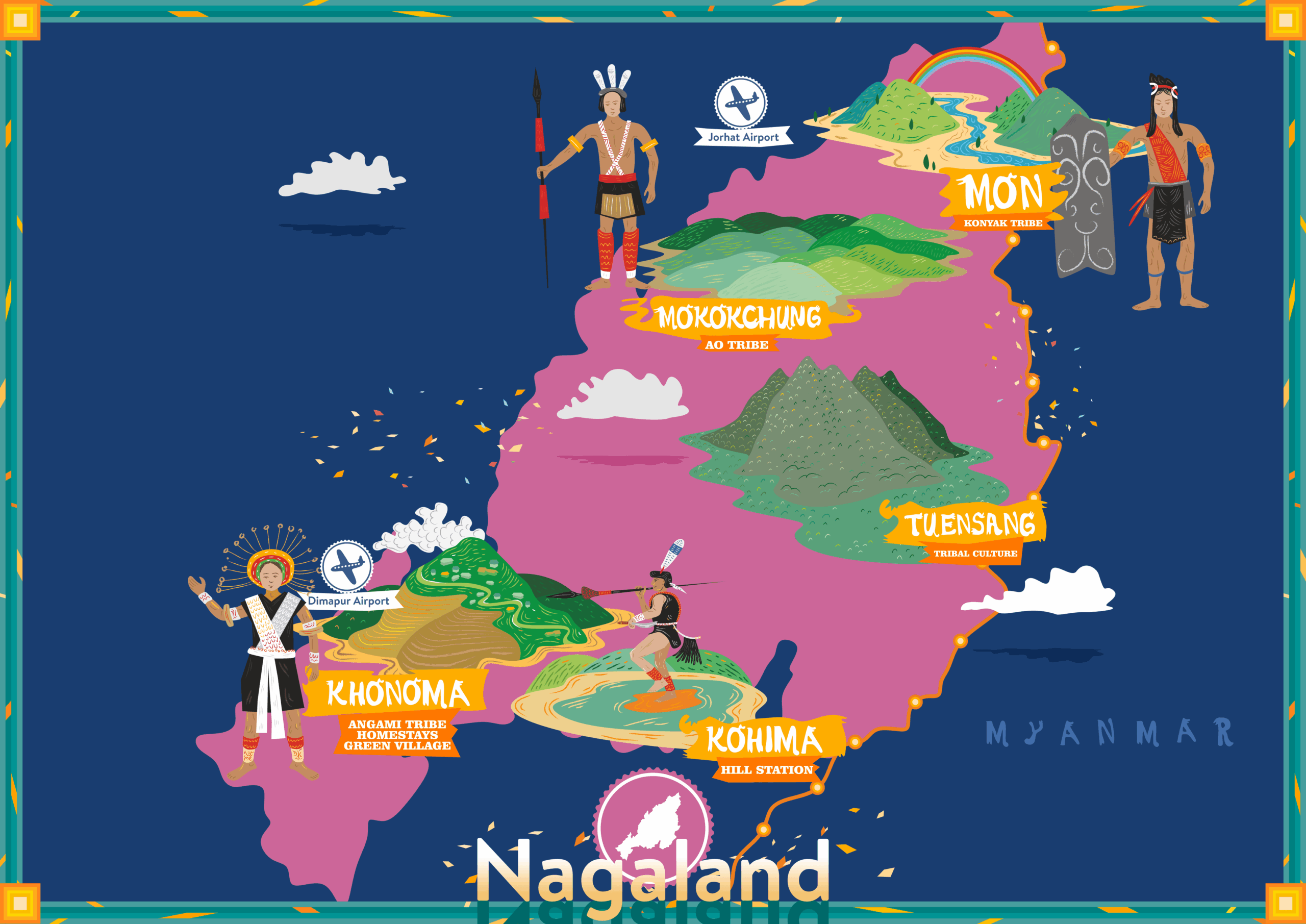
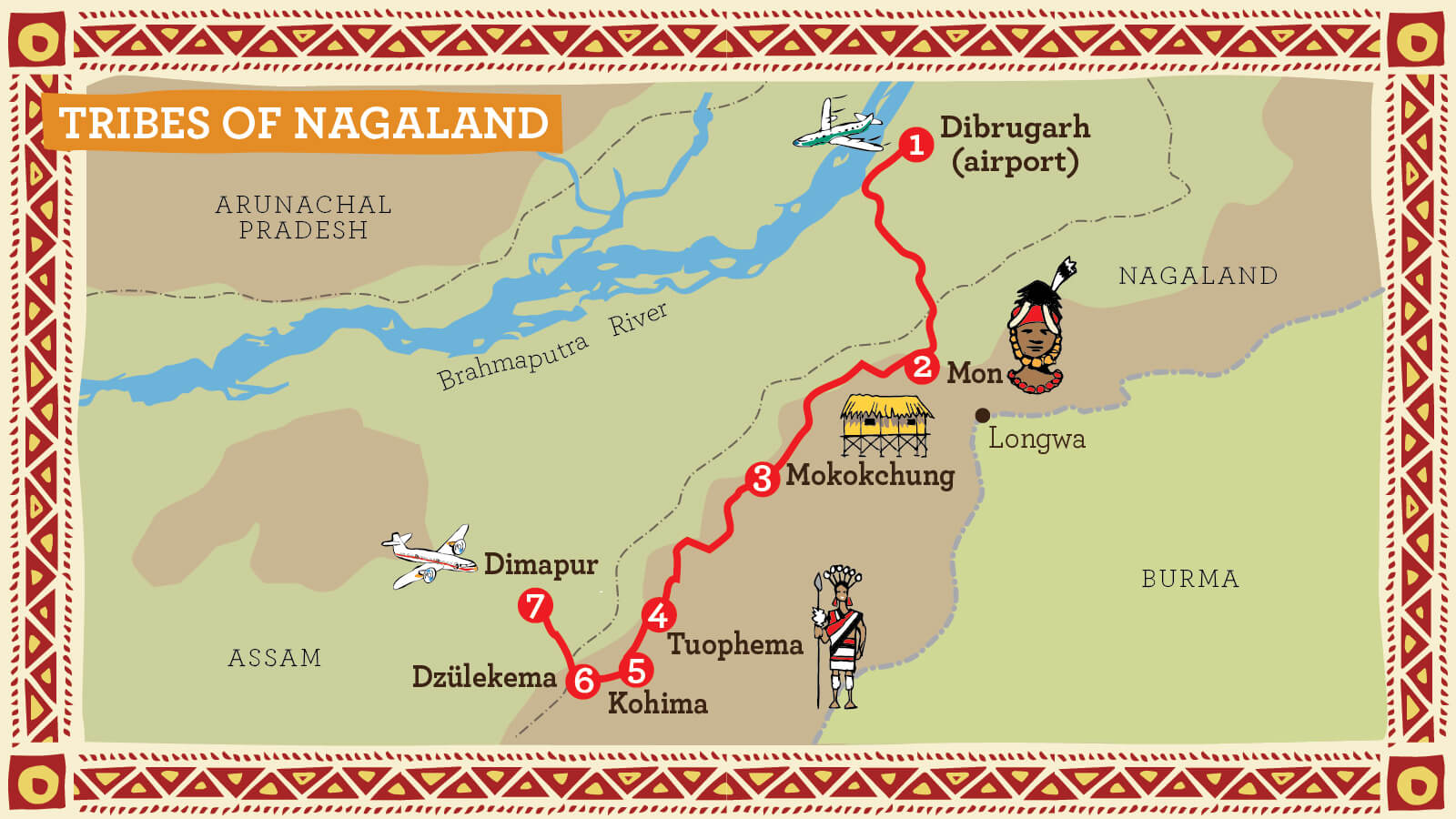
Arrive at Dimapur Airport, where our driver will meet and assist you. From there, drive to Kohima, the capital of Nagaland. On arrival, check in at your hotel.
Later, take a short drive (21 km) to Khonoma, Nagaland’s first “green village.” Known for its strong conservation efforts and history, it’s also home to Angami Zapu Phizo, a key figure in the Naga movement. Return to Kohima in the evening. Free time to relax. Overnight stay in Kohima. Overnight stay in Kohima.
Day 5
KOHIMA- EXCURSION TO JAKHAMA & KISAMA HERITAGE VILLAGE – RETURN TO KOHIMA*:
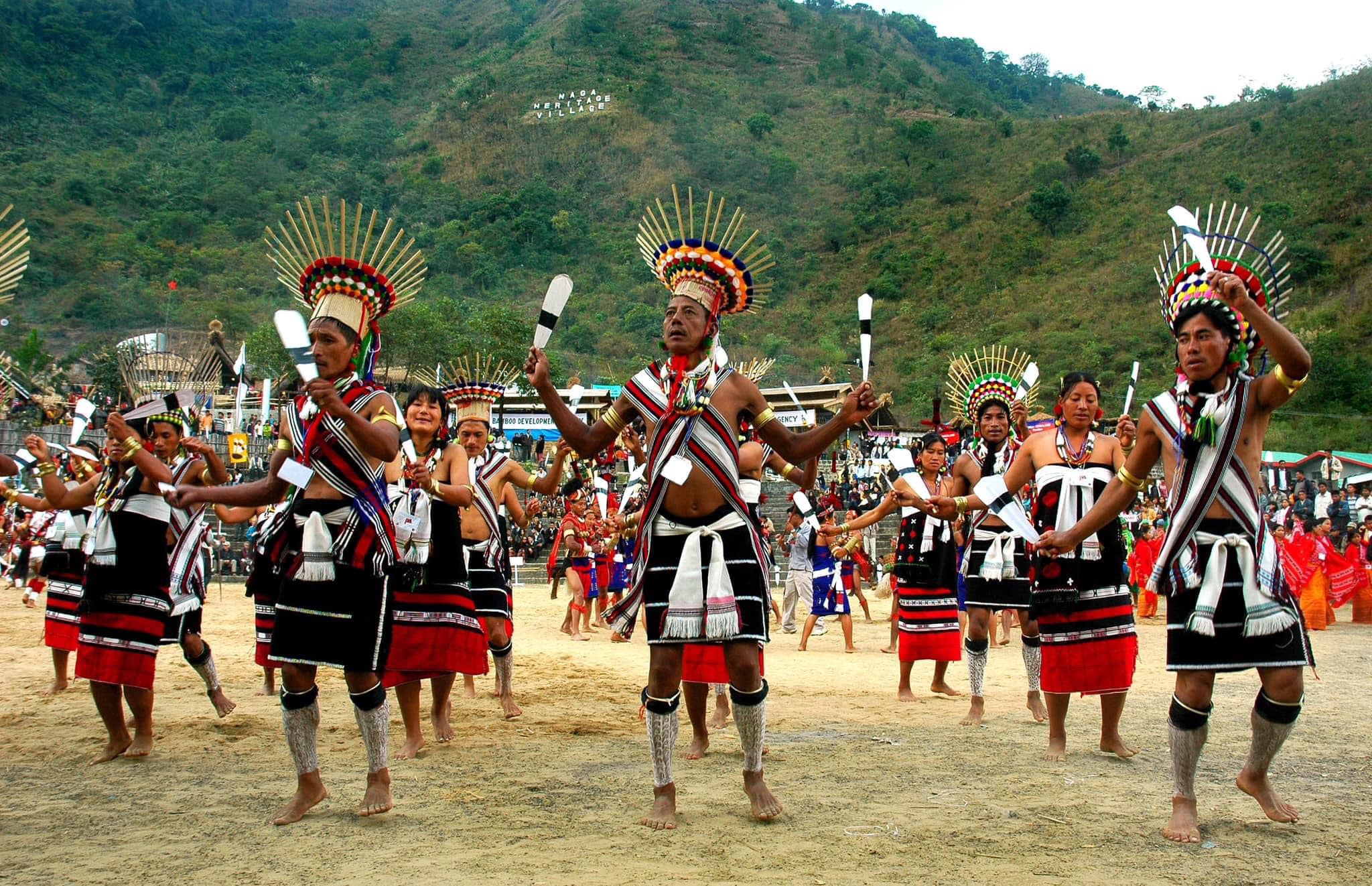
After breakfast, head to Jakhama village (around 16 km from Kohima) to see traditional Angami Naga homes, including rich men’s houses. Continue to Kigwema and visit the Kisama Heritage Village, the site of the famous Hornbill Festival (held annually from Dec 1–7).
Have lunch in Kohima, then explore local emporiums and markets to discover traditional Naga foods and handicrafts. Overnight stay in Kohima.
DAY 6
KOHIMA TO MOKOKCHUNG:
After breakfast, drive towards Mokokchung in north-central Nagaland, home to the Ao Naga tribe, one of the most educated and Christian-majority tribes in the state. En route, stop at Touphema and visit Touphema Bawe, the old village of the Angami Nagas. If time allows, visit the bamboo forest in Mopungchuket village. Overnight stay in Mokokchung.
DAY 7
MOKOKCHUNG TO MON
After breakfast, drive to Mon district, which takes around 8 hours. This area is inhabited by the Konyak tribe, known for their unique culture and traditions. Overnight stay at Mon.
DAY 8
MON- LONGWA- MON:
Start early and drive to Longwa, a fascinating village that lies on the border between India and Myanmar. The village chief’s house (Angh) actually straddles both countries. Explore the village, meet locals, and if lucky, spot tattooed elders- once feared headhunters.
Later, visit Hongphui village, another Konyak settlement. Return to Mon for the night.
DAY 9
MON TO SIVSAGAR:
After breakfast, drive towards Sivsagar in Assam. Once reach, visit historical sites like Rang Ghar, Talatal Ghar, and Shiva Dol. Evening check in at your hotel. Overnight stay in Sivsagar.
DAY 10
SIVSAGAR TO MAJULI ISLAND
After breakfast at leisure, drive to Majuli (4-5 hours), the biggest inhabited river island in the world and a well-preserved spot for Assamese and tribal culture. En route cross the mighty Brahmaputra on a scenic ferry ride and visit the historical ruins and temples at Sivasagar that date to the age of the Ahoms. Spend the rest of the day leisurely exploring the vast island and the beautiful countryside. The large wetlands and lakes on the island also attract many birds which interest many ornithologists. Enjoy a spectacular sunset by the riverside. Enjoy a rural stay, relish the ethnic Mishing cuisine and also try the local brew, Apong. A traditional Mishing dance performance can be arranged upon prior request. Your stay will be in a clean traditional bamboo cottage with basic amenities.
Day 11
Majuli
Spend the day at leisure exploring the island and its secrets. Observe fishermen in the misty
morning as they go out for their daily catch. Visit age-old monasteries where monks learn Hindu philosophy and unique forms of arts, drama, and music. Interact with the monks to learn further about the tradition they follow. Visit a mask-making center where extremely elaborate masks are made in an indigenous method depicting elements from mythology. Go for leisurely walks or bicycle to some of the villages on the island, home to tribes such as Mishings, Deoris, and Kacharis, thus learning more about the local way of life. You may also do a bit of bird watching, spend time indulging in a spectacular sunset and taste the ethnic cuisine. The evening will be at leisure. Bonfires can be arranged in winter.
Day 12
Majuli
Travel to the remote villages of the Deori tribe and Sonowal Kachari tribe in the northern part of the island. One can also enjoy fishing or cycling leisurely around the island. The large wetlands and lakes on the island also attract many birds which interest many ornithologists and enjoy a spectacular sunset on the banks of Brahmaputra.
Day 13
Majuli – Jorhat (Travel time: 1 hour by ferry + 1 hour by road – 20 km) – Kolkata –
In the morning, take the ferry across the Brahmaputra River to Neematighat and you will be transferred to Jorhat airport for your flight to Kolkata. Arrival, welcome, and check-in at your hotel for the night.
Day 14
Kolkata – Bhuabneshwar (Day Train ride)
Arrival Bhubaneswar and a Warm Welcome at your port of arrival to Odisha.
Local sightseeing tour based on the time availability as per your arrival. Sunset at Khandagiri Jain caves where our guide will brief you the itinerary and other related information.
Learn the history of Kalinga and Utkal as you enjoy the light and sound show at the Dhabagiri Peace Pagoda at the bank of Daya river where King Ashoka fought Kalinga war and adopted non violence. Back to hotel after dinner at a local restaurant.
Day 15
Mangalajodi
Early morning depart for Mangalajodi village, the wetlands of Chilika lake which is the winter heaven for migratory birds who comes for nesting at the grasslands. ENJOY the hand rowing boat ride through the creeks where you may meet large numbers of migratory and local resident spices of birds which is a treat for any nature lover. It is worth mention here, that the boat men here were poachers once upon a time and after due motivation of local NGO and forest department, they are now the conservators for these birds paradise. Enjoy the sunset boat trip
Day 16
Satapada At Chillika
Donot miss the sunrise at the very special virgin beach near your camp where you may have the entire beach exclusively for you. Take a bicycle ride in the trails of Balukhand forest and then depart for SATAPADA at Chilika lake.
At Satapada where you will learn about the eco system and conservation methods for this Ramsar awarded biggest Brackish water lake of Asia. Stay at the Eco cottage by the side of the lake.
Day 17
Day-with-fisherman-satapada
Today we intend to give you some authentic experience with the local community as you spend a day with fishermen.
Day 18
Puri
Heritage walk nearby temple
Jagannath Temple
The oldest and the most sacred temple of Orissa is the well-known Jaganath temple which is 63kms from Bhubaneswar. It is one of the important pilgrimage destination for many Hindu clan.
Day 19
Puri Local Relax day
Walk at the beautiful beaches and walk in the oldest city of the India.
Day 20
Puri – Bhubaneshwar – Delhi
Transfer to the Delhi by national flight. Reach to the hotel. Free evening time.
Day 21
Delhi local
Visit some memorable moment in New Delhi, Walk Chandni Chowk area. Return to the hotel.
Day 22
Back to your home
After breakfast take the international flight to back your home. Tour concludes:

Reviews
There are no reviews yet.